
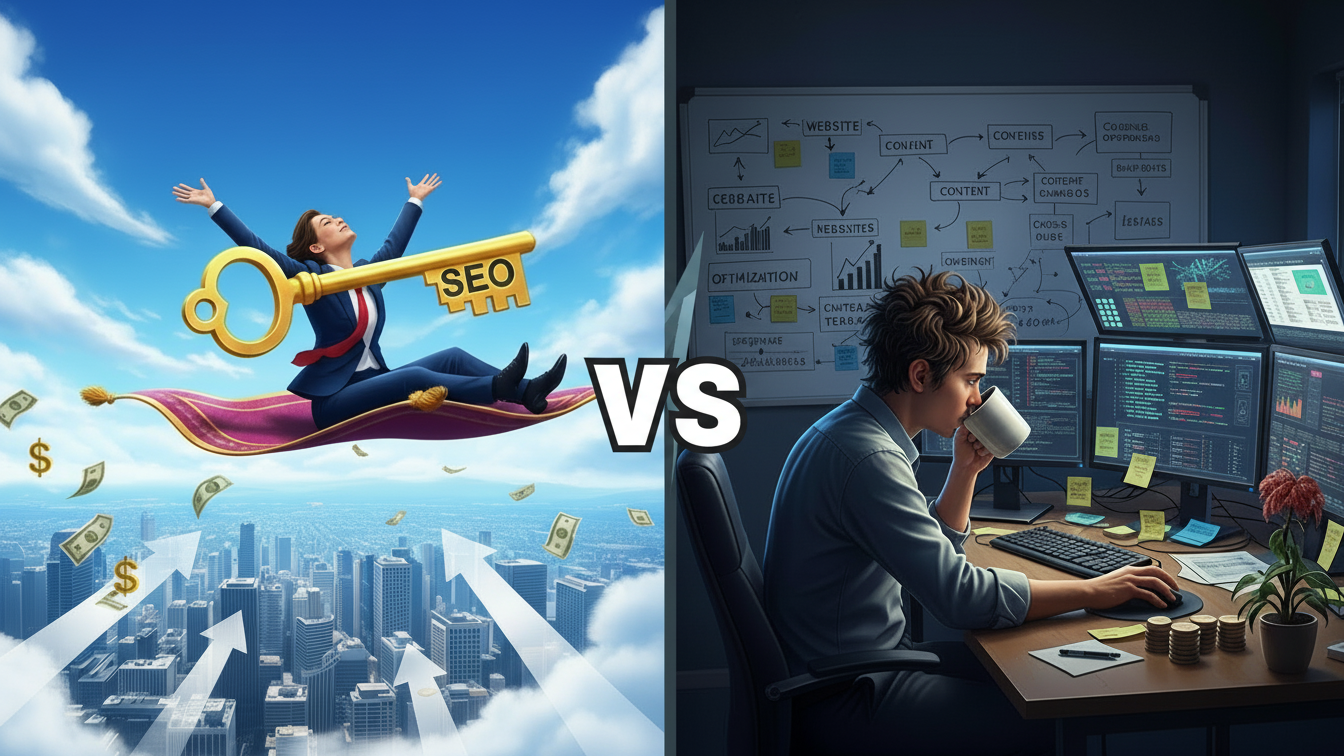
For years, SEO has been misunderstood.
To many, it’s just about adding a few keywords, writing a blog, buying backlinks, and asking, “Can we rank #1 tomorrow?”
But in 2025, the reality of SEO looks entirely different. Today, search success is built on strategy, structure, trust, and technology, not quick fixes.
Let’s break down what clients think SEOs do versus what SEOs actually do—and why understanding the difference is crucial for real results.
What Clients Think SEOs Do
1. “Just Add Some Keywords”
For many, SEO begins and ends with keyword insertion. But keywords alone don’t move rankings anymore.
Modern SEO requires understanding semantic search, intent, and context — not just stuffing words into paragraphs.
Google’s AI models analyze meaning, relationships, and user value, not just frequency.
2. “Just Write a Blog”
Content is still king, but not all content rules the same kingdom.
Simply publishing blog posts isn’t enough.
What matters now is content strategy, topic clusters, internal linking, structured formats, and continuous optimization.
3. “Buy Some Backlinks”
Gone are the days when paying for backlinks guaranteed success.
Google now rewards trustworthy, earned authority brand mentions, citations, digital PR, and quality editorial references that prove legitimacy.
4. “Rank #1 Tomorrow?”
SEO isn’t a sprint; it’s a system.
Search performance is built through data-driven processes, technical refinement, and consistent iteration not overnight miracles.
Modern SEO is closer to engineering than marketing guesswork.
What SEOs Actually Do in 2025
The modern SEO toolbox is a blend of AI, analytics, creativity, and technical precision. Let’s unpack each element from the image and why it matters today.
1. Internal Linking
Internal linking builds an information architecture, a map that tells Google which pages matter most.
Smart linking distributes page authority, strengthens topical relevance, and guides both users and bots through your content ecosystem.
2. E-E-A-T (Experience, Expertise, Authoritativeness, Trustworthiness)
Google’s quality framework assesses the credibility of the speaker and their reasons for being credible.
Optimizing for E-E-A-T involves showcasing genuine expertise, including author bios, citing credible sources, and being transparent about your identity and purpose.
3. Search Intent Mapping
Every query has a purpose: learning, buying, comparing, or navigating.
Modern SEOs align each page with a specific intent, ensuring that searchers find exactly what they expect.
Intent mapping transforms random keywords into strategic user journeys.
4. Schema Markup
Schema adds structured data that helps search engines understand content types — like articles, reviews, FAQs, products, and events.
It enables rich snippets, knowledge panels, and AI summaries — boosting visibility beyond blue links.
5. Site Architecture
Your website’s structure defines its crawlability, hierarchy, and authority flow.
A strong site architecture supports scalability, faster indexing, and clear relationships between topics.
6. AI Search Tracking
With Google’s Search Generative Experience (SGE), AI is reshaping visibility.
SEOs now track AI-generated results, zero-click searches, and entity mentions to understand how AI systems surface content.
7. Canonicals
Duplicate or similar pages can confuse Google.
Canonical tags signal which version is the “main” one, preserving ranking equity and avoiding duplication penalties.
8. Entity Optimization
Search is now built around entities: people, brands, places, and concepts.
By linking your content to recognized entities (via schema, Wikidata, or structured references), you help search engines understand and trust your brand contextually.
9. Crawl Budget
Search engines allocate limited resources to crawl your site.
Efficient SEOs optimize crawl budget by removing redundant URLs, fixing redirects, and improving site efficiency so bots index the pages that matter most.
10. Core Web Vitals
Speed, interactivity, and stability directly impact rankings and UX.
Google measures LCP (Largest Contentful Paint), INP (Interaction to Next Paint), and CLS (Cumulative Layout Shift) to ensure a smooth user experience.
Fast = trustworthy = visible.
11. BeeVision SEO
This is the tool that powers SEO insights.
From technical crawling to keyword tracking and performance monitoring, professionals rely on BeeVision’s data-driven approach, not guesswork, to make smarter decisions.
13. Topic Clusters
Instead of scattered content, SEOs now build topic clusters, interlinked groups of pages centered around a core pillar topic.
This approach boosts topical authority and helps Google understand your site’s subject depth.
14. XML Sitemaps
A sitemap is your site’s roadmap for search engines.
Maintaining clean, regularly updated XML sitemaps ensures that important pages are found and indexed efficiently.
15. LLM Optimization
With Large Language Models (LLMs) influencing AI search, optimizing for them means creating content that’s machine-readable, structured, and context-rich.
That’s how your brand gets surfaced in AI answers.
17. Technical SEO
From HTTPS and mobile optimization to schema validation and canonicalization — technical SEO is the foundation that makes everything else possible.
It’s about ensuring your site works perfectly for both humans and machines.
18. Brand Mentions
Even without backlinks, brand mentions send trust signals to search engines.
They help Google understand your brand’s reputation and relevance within a topic ecosystem.
19. Digital PR
Modern SEOs build authority through visibility, not spam links.
Digital PR involves storytelling, outreach, and newsworthy campaigns that earn organic mentions and backlinks from credible publishers.
20. Content Decay
All content loses freshness over time.
SEOs track content decay when rankings drop due to outdated info and refresh, expand, or consolidate pages to maintain authority.
The Real SEO Equation
SEO in 2025 is a living system, not a checklist. It merges:
- Strategy (intent, clustering, entities)
- Technical foundation (architecture, crawl, speed)
- Trust signals (E-E-A-T, PR, mentions)
- AI awareness (LLM, SGE, visibility)
Each component reinforces the others, forming a holistic approach that drives sustainable, measurable growth.
Final Thoughts: SEO Is Evolving. Are You?
The gap between what clients think SEOs do and what SEOs actually do is wider than ever. But that gap is also where opportunity lives.
If you want to win in search today, stop chasing rankings and start building authority, usability, and intelligence into your digital presence.
Because the reality of SEO isn’t about tricks, it’s about trust, technology, and transformation.


